In the world of motion‑picture production, audio quality is often the silent partner to great cinematography. You rarely notice good sound — but you always notice bad sound. Dialogue ruined by hums, buzzes, RF interference, or strange electrical noises can undo even the best‑shot scene. One of the key reasons these problems occur is misunderstanding the difference between balanced and unbalanced audio. Although the terms sound technical, the difference between them is surprisingly straightforward, and once you understand it, you’ll instantly see why professional film sound departments rely almost exclusively on balanced connections. This article breaks down both systems, explains how they work, and shows where each belongs in an on‑set workflow.
What Is Unbalanced Audio?
Unbalanced audio is the simpler of the two systems. It uses just two conductors inside the cable:
- Signal (hot)
- Ground/shield, which doubles as the return path
Because the ground is shared between the cable’s shielding and the audio signal, any electrical activity the cable encounters can easily leak into the sound. This interference might come from:
- Lighting dimmers
- LED panels
- Mains power cables
- Generators
- RF activity on set
- Nearby transmitters (phones, walkies, Wi-Fi)
In everyday consumer electronics — headphones, phones, small audio adapters — this isn’t usually a problem. The cable is short, the environment clean, and the equipment isn’t designed for professional filmmaking.

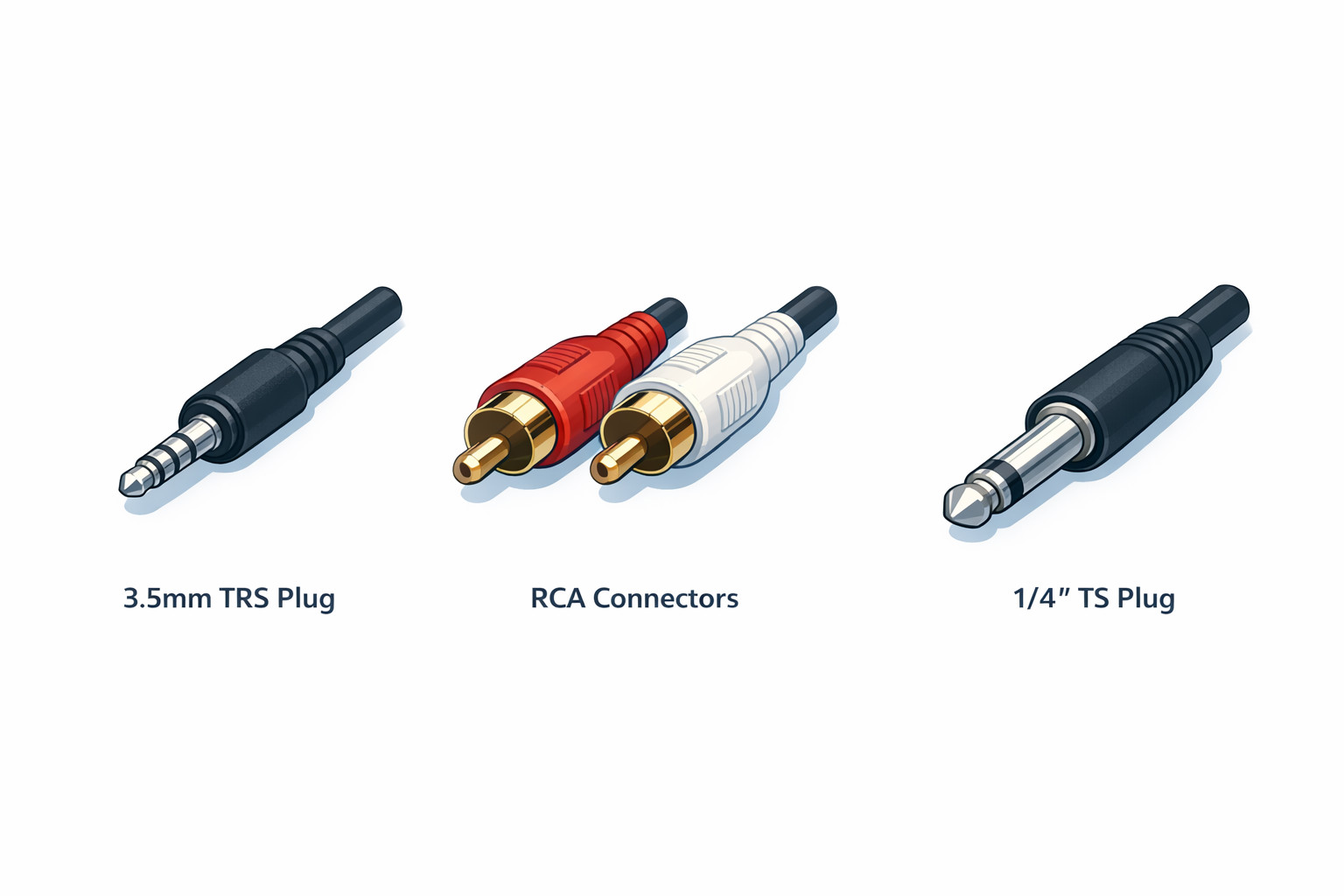
Common unbalanced connectors include:
- 3.5mm TRS (the plug found on DSLRs and consumer devices)
- RCA (common on DVD players and older consumer gear)
- 1/4″ TS (instrument cables, basic patch leads)
Why Unbalanced Falls Apart on Set
Motion‑picture production isn’t a controlled lounge room environment. It’s a tangle of high-powered lighting cables, long cable runs, and RF-heavy equipment. Any unbalanced cable longer than 2–3 metres can pick up noise like an antenna.
This is why you almost never see professional film sound mixers running unbalanced audio from a microphone or wireless receiver. It’s simply too vulnerable.
That said, unbalanced audio still appears in film workflows — mostly where short patch cables are used:
- Inside compact DSLR video rigs
- Timecode to DSLR cameras
- Small patch cables inside a sound bag
- Prosumer microphones designed for 3.5mm inputs
But generally, these are exceptions, not the rule.

What Is Balanced Audio?
Balanced audio is designed specifically to eliminate the noise problems unbalanced systems suffer from. These cables use three separate conductors:
- Hot (+)
- Cold (–)
- Shield/ground
Instead of sending the signal once, a balanced line sends it twice — the second time in inverted polarity. If noise is picked up along the cable, it affects both versions of the signal equally. When the two signals reach the mixer or recorder, the inverted one is flipped back, and the noise cancels out. This process is known as common‑mode noise rejection, and it is the heart of why film sound crews rely on balanced cables.
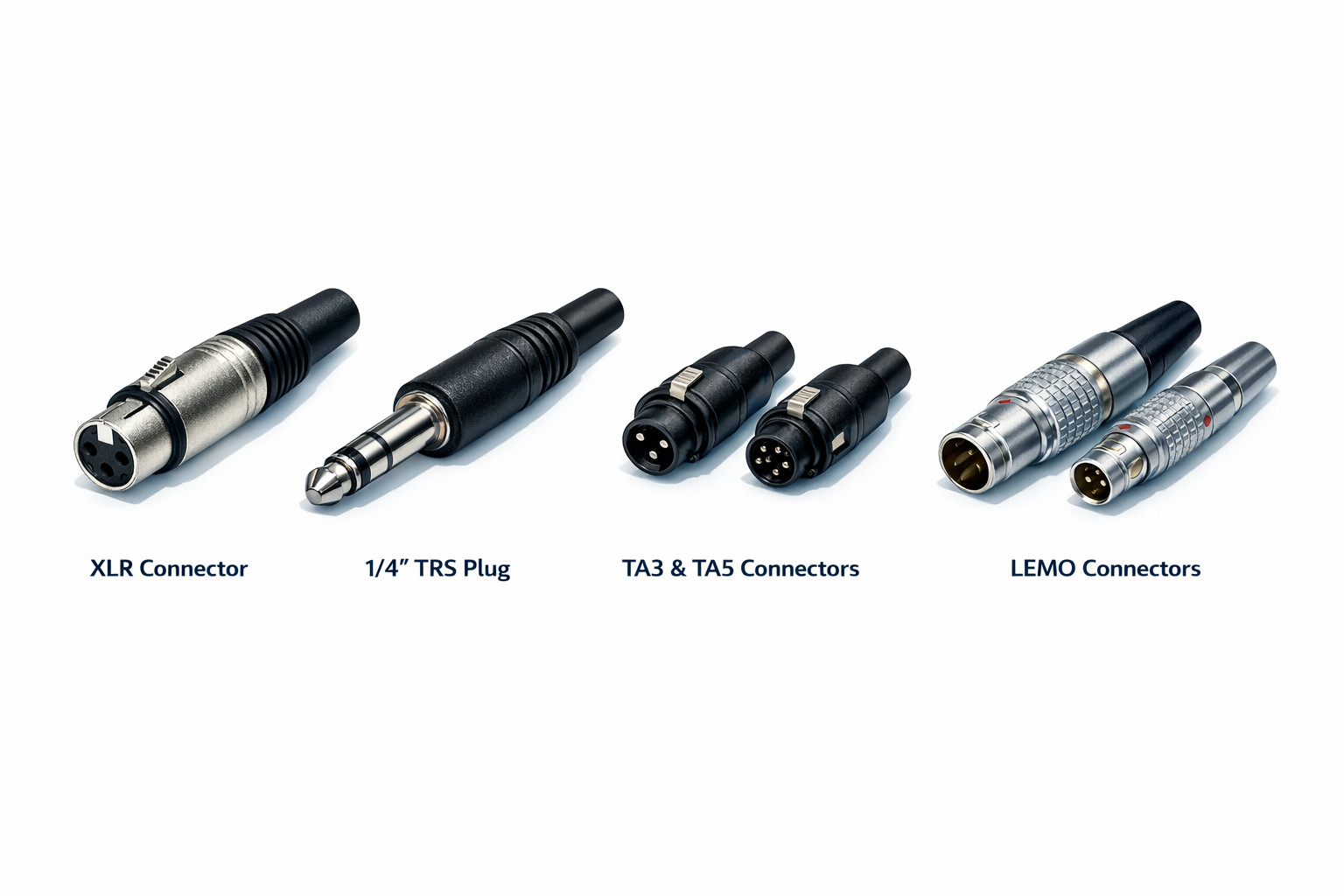
Balanced connectors include:
- XLR – the industry standard for microphones
- TRS – balanced version of the 1/4″ plug
- TA3 and TA5 – used on professional recorders and wireless receivers
- LEMO connectors – used in many specialist audio devices and powering/locking systems
Why Balanced Audio Is Essential for Film Sound
Film sets are electrically noisy environments. Balanced audio remains stable and clean even over long distances, making it ideal for:
- Boom microphone runs of 10–30 metres
- Wireless receiver outputs to a mixer/recorder
- Camera sends or return audio lines
- Plant mics set across large rooms
- Cabled feeds from stage boxes to carts
Balanced lines also allow 48V phantom power, which many shotgun and condenser microphones require.
If a film sound department had to rely on unbalanced audio for any of these tasks, the noise issues would be unmanageable.
A Real‑World Example on Set
Picture a typical location shoot. A boom operator is positioned 8 metres away from the sound cart. The lighting crew has power cables running along the same floor path as the boom cable. LED panels are running at full brightness, and a generator is humming just around the corner.
If the boom microphone were connected via an unbalanced cable, you’d almost certainly hear:
- 50 Hz hum
- Buzz from dimmers
- RF crackle
- A general rise in background hiss
With a balanced XLR run, the signal remains clean, stable, and resistant to interference — even in this chaotic environment.
This reliability is why balanced audio has become the universal standard for professional film sound
When Unbalanced Audio Is Acceptable in Filmmaking
Unbalanced audio isn’t “bad” — it’s just designed for short, low-risk connections. In filmmaking, that usually means:
- Camera-top consumer microphones
- DSLR-style rigs
- Timecode feeds via 3.5mm (to cameras that lack professional audio inputs)
- Short patch cables inside a field recorder bag
- Headphones monitoring
Anything more complex or mission-critical should move to a balanced system immediately.
A Quick Comparison
Balanced audio is for:
- Professional microphones
- Long cable runs
- Film, TV, ENG, and broadcast workflows
- Clean audio under challenging electrical conditions
Unbalanced audio is for:
- Consumer or prosumer equipment
- Short cable runs
- Minimal electrical interference
Conclusion: Why This Matters for Motion‑Picture Sound
Understanding the difference between balanced and unbalanced audio is essential for anyone working in film. Clean dialogue doesn’t happen by accident — it’s the result of choosing the right tools, using reliable cables, and designing a signal chain that resists noise and interference.
Balanced audio gives filmmakers exactly that reliability. It keeps boom microphones quiet, wireless systems stable, and camera feeds clean. While unbalanced connections still have their place, they simply can’t compete with the noise rejection and durability of a properly balanced system.