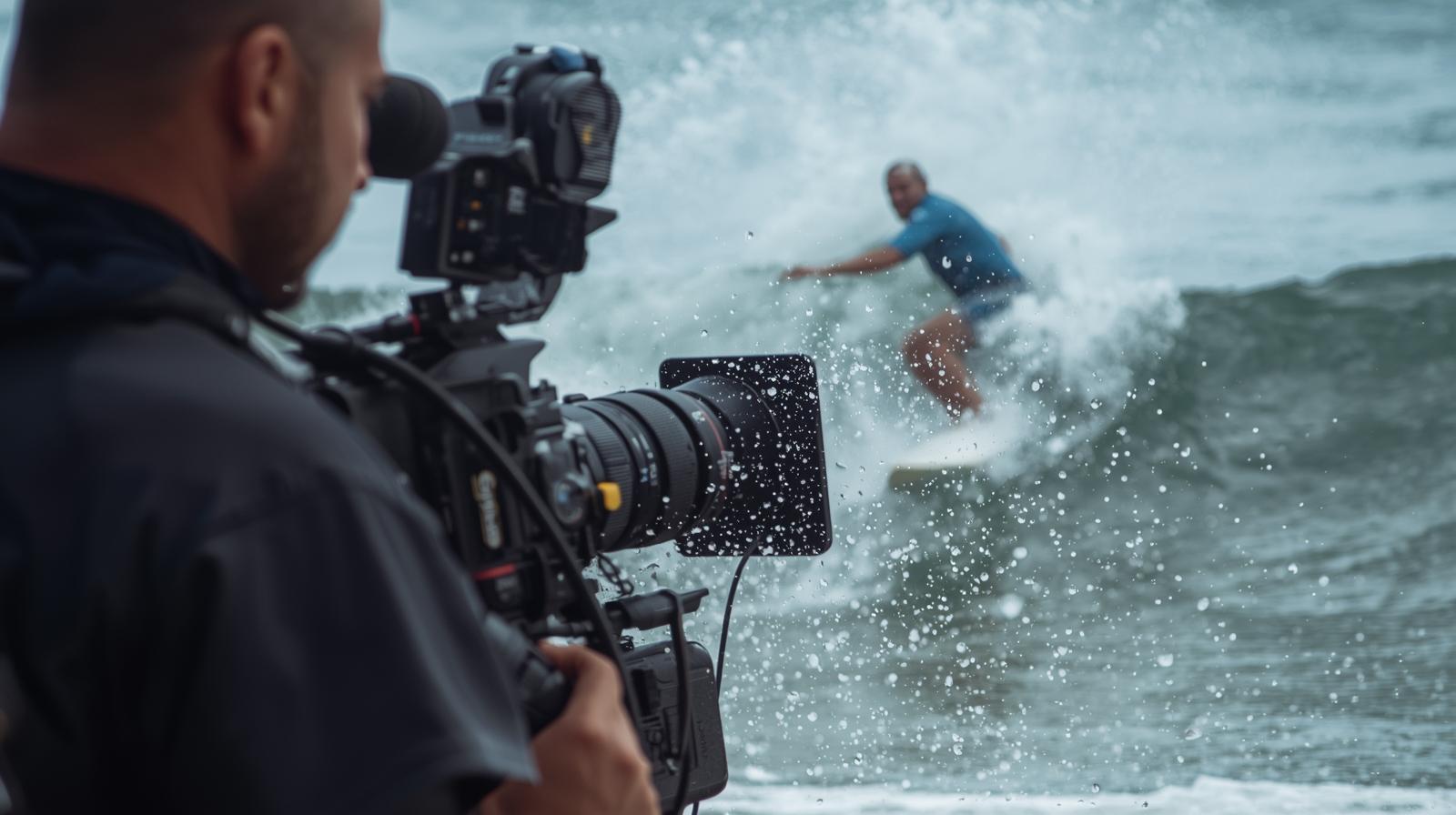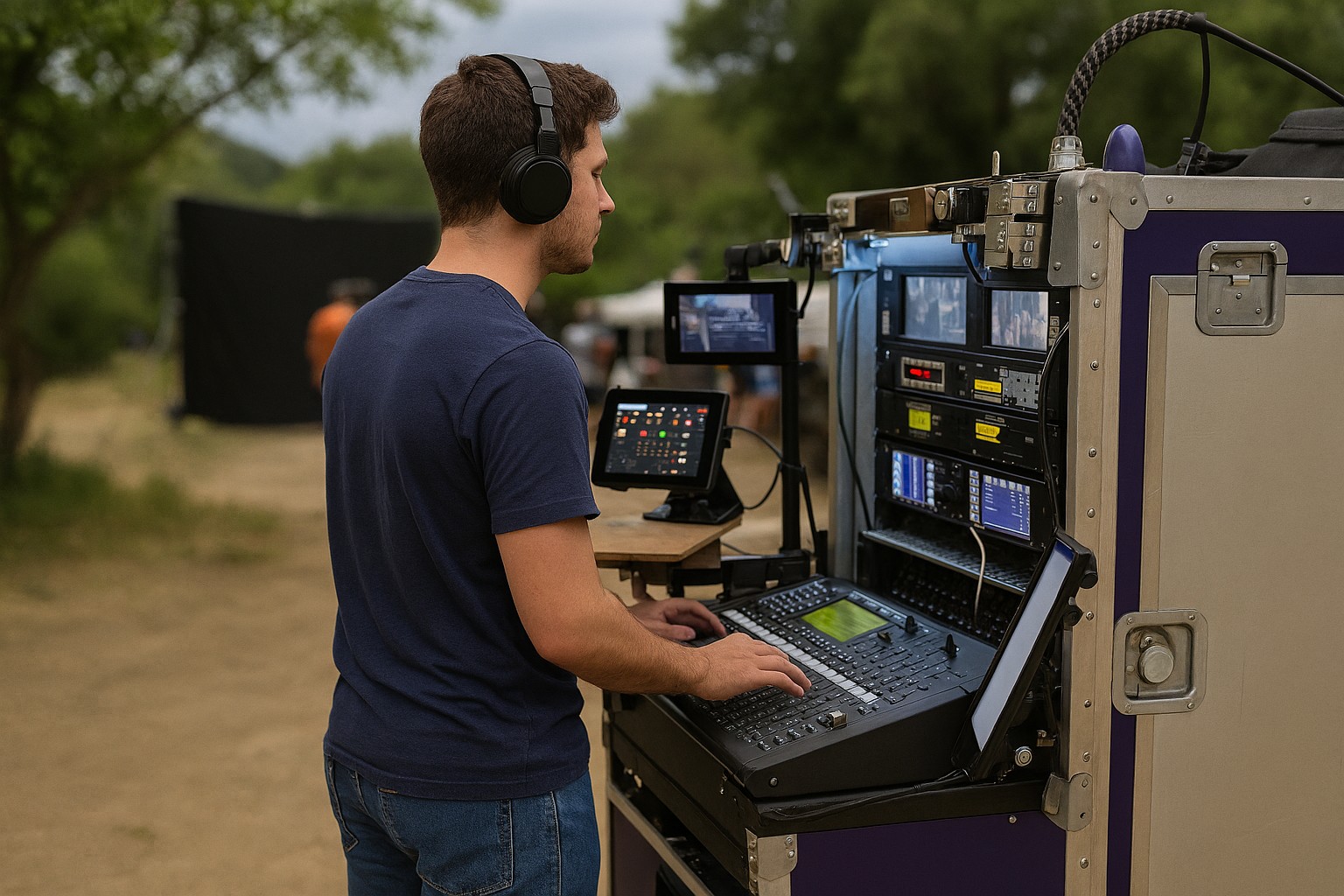
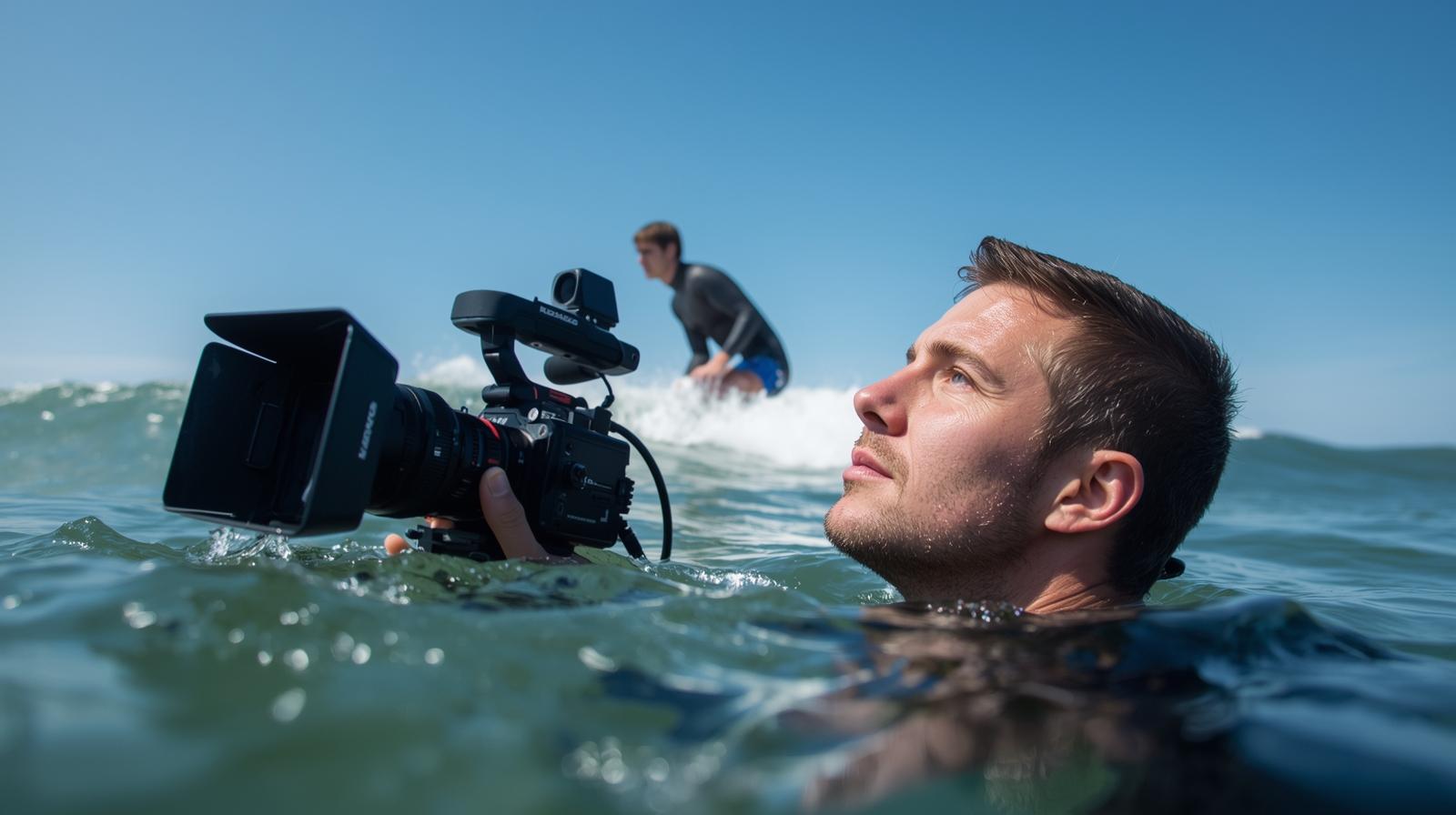
Most of us see IP67, IP68 or IP69K on spec sheets and think “waterproof” or “dustproof.” But IP ratings are more than marketing shorthand—they’re a standardised way of describing how well an enclosure or connector keeps out solids (dust, sand, tools) and liquids (rain, jets, immersion) under defined test conditions. Understanding what those two digits actually certify—and what they don’t—can save production costs, prevent downtime, and protect budgets. This guide explains IP ratings in plain language, shows how to apply them in design or in the field, and gives you a practical selection process you can use today. We’ll also cover common pitfalls (like mixing plug and socket ratings), what IP doesn’t cover (UV, shock, chemicals), and how to pick a rating that fits Australian conditions—dust, heat, salt air and sudden rain.
IP Ratings 101: The Two Digits Explained
IP stands for Ingress Protection. It’s written as IP followed by two digits (and occasionally letters): for example IP54, IP67, IP68, IP69K.
First digit (0–6): Solids — protection against objects and dust.
5 = dust‑protected (limited dust ingress, no harmful effects)
6 = dust‑tight (no dust ingress)
Second digit (0–9K): Liquids — protection against water.
1–4 = drips/splashes
5–6 = water jets / powerful jets
7 = immersion up to 1 m (typically 30 minutes; check datasheet)
8 = immersion deeper/longer as specified by the manufacturer
9K = high‑pressure, high‑temperature spray (wash‑down)
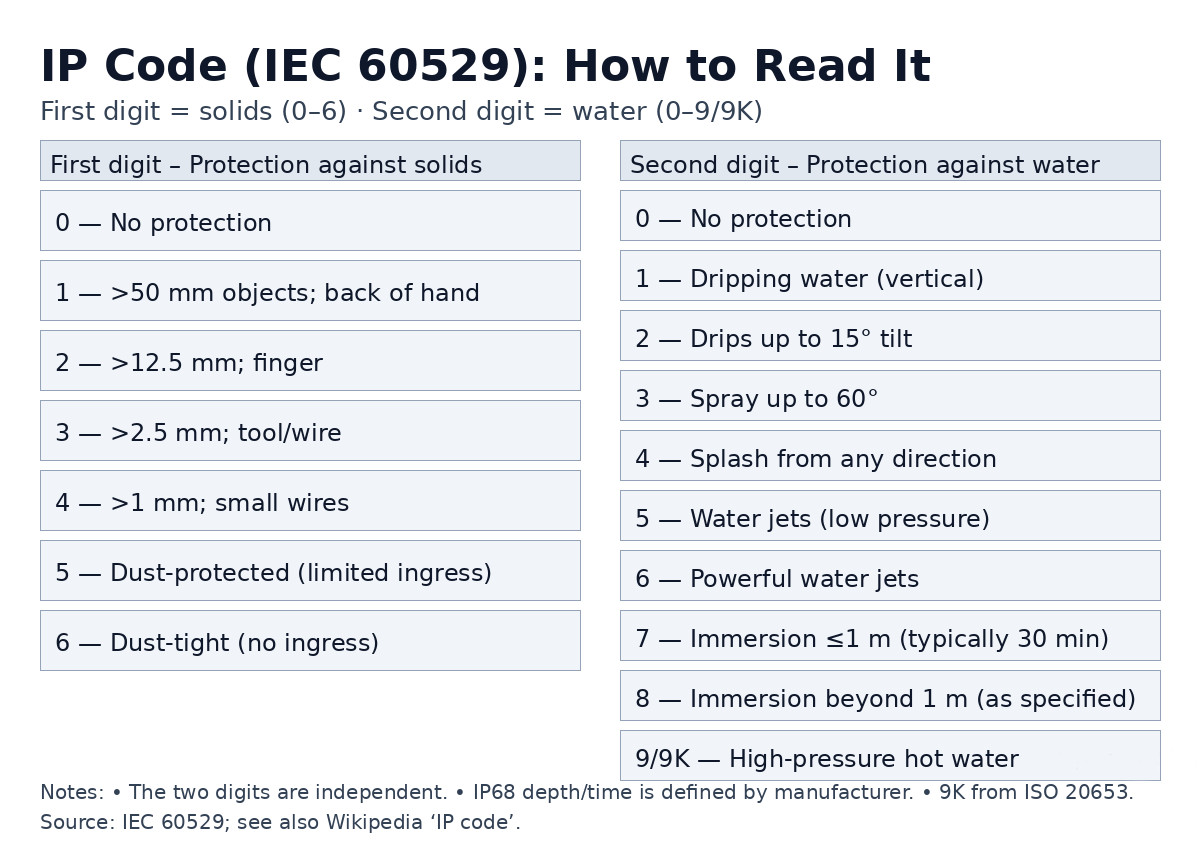
Key principle: The two digits are independent. IP66 is excellent for dust and powerful jets, but it doesn’t imply immersion protection. Conversely, IP67 handles immersion but may not be certified for high‑pressure jets.
Common Ratings in the Real World
Here’s how these show up day‑to‑day across sets, locations and industrial spaces:
- IP20–IP40: Indoors only. Racks, patchbays, general electronics—no water protection.
- IP44/IP54: Light rain or splashes; good for sheltered outdoor use or sweaty environments.
- IP65: Dust‑tight + rain and low‑pressure hose; robust for most outdoor jobs.
- IP66: Dust‑tight + powerful water jets; exposed fixtures, truss‑mounted gear, vehicle rigs.
- IP67: Dust‑tight + accidental immersion (puddles, storm drains). Ideal for unpredictable weather.
- IP68: Dust‑tight + specified continuous immersion (depth/time varies—read the datasheet).
- IP69K: Dust‑tight + high‑pressure, high‑temperature wash‑down; common for vehicle rigs and industrial cleaning.
- IP68 is not a fixed number. One manufacturer’s IP68 might specify 2 m for 1 hour; another could certify 10 m for continuous duty. Always find the depth and duration in the datasheet.
- The “X” in IPX7, Optional Letters & What They Mean
- IPX7: The X means solids (dust) weren’t tested or declared. It does not mean “zero dust protection”—just unspecified.
- Optional letters can appear (e.g., M for moving parts during test, S for stationary, W for weather conditions). Treat these as add‑ons; the two digits remain the primary reference.
Mated vs Unmated: Why the Lowest Rating Wins
Connectors, cable glands and backshells introduce a reality check:
- Many connectors are IP‑rated only when mated (plug + socket together).
- Unmated connectors can be significantly less protected—unless protective caps are used.
- When you mate parts with different ratings, the assembly inherits the lower rating at the interface. Example: an IP68 socket mated with an IP50 plug results in a connection limited to IP50 at the mating face.
Practical implication: If you need IP67/IP68 while connected, both sides—and the cable accessories—must be designed and rated to achieve that as a mated system.
What IP Ratings Don’t Cover (But You Still Need to Plan For)
IP deals with ingress. It does not certify:
- Impact/shock (IK ratings or MIL/IEC shock standards cover this)
- UV exposure/weathering, ozone, salt fog/corrosion
- Chemicals/solvents, fuels, oils
- Temperature extremes, thermal cycling, icing/condensation
- Ingress via cable tails if glands/boots aren’t fitted correctly
- Aging of seals—elastomers can harden, tear or deform with time and heat
- For mission‑critical work, read the full environmental spec (not just IP) and factor in UV, corrosion, impact, and factor in UV, corrosion, impact, and temperature.
IP67 vs IP68 vs IP69K: Choosing the Right Level
- IP67 — Balanced protection for harsh weather, accidental immersion. Ideal for outdoor shoots, Outdoor brodcast vans in storms, ground cabling near puddles.
- IP68 — Use when known submersion beyond 1 m or longer durations are part of the risk profile. Always cite the exact depth/time from the datasheet.
- IP69K — For wash‑down scenarios and vehicle‑mounted gear exposed to high‑pressure, high‑temperature cleaning (common in industrial, food, or transport environments). Note: IP69K focuses on spray/jet conditions; it does not automatically imply deep immersion capability.
General Selector Guide
| Scenario | Recommended IP | Notes |
| Indoor racks, patch panels | IP20–IP40 | Keep liquids away; plan cable management. |
| Stage/FOH indoors, occasional spills | IP44–IP54 | Add rain covers for unexpected weather. |
| Outdoor lighting, truss, grip in storms | IP65–IP66 | Prioritise cable glands and downward‑facing entries. |
| Ground runs, puddle risk, docks | IP67 | Immersion tolerance for accidents. |
| Wet‑work, underwater rigs, tunnels | IP68 | Verify depth/time in datasheet. |
| Vehicle rigs, industrial cleaning | IP69K | High‑pressure, hot water jets. |
| Body‑worn TX & mounting systems | IP54+ | Sweat barriers, tape technique matter. |
Australian Conditions: Practical Notes
Australia’s climate is harsh on equipment, so choosing the right materials and sealing levels is essential. Keep these factors in mind when specifying connectors and accessories for field use.
Sudden Downpours: For “four seasons in a day,” aim IP66–IP67 on exposed equipment plus rain covers for non‑rated devices.
Heat & UV: Gaskets, boots and cable jackets age faster under Australian sun. Prefer materials with UV stabilisers; inspect and replace seals proactively.
Dust & Sand: Outback locations and coastal wind can drive fine particles into threads. Choose IP6X where possible and keep spare blanking caps.
Salt Air & Corrosion: Coastal shoots accelerate corrosion. Specify nickel‑plated brass or stainless where compatible; consider protective coatings and freshwater rinse after exposure.
Procurement & Setup Checklist
Before committing to any connector or assembly, run through this quick checklist to ensure the rating, materials, and accessories truly match the job requirements.
Documentation & labelling: Mark assemblies with their effective rating so crew know what they can safely do in the field.
Define the environment: dust, jets, immersion, wash‑down, UV, chemicals, temperature range.
Pick the IP minimum for solids and water separately (don’t assume one implies the other).
Mated vs unmated: Confirm ratings in both states; add tethered protective caps for unmated ends.
For IP68: Record the manufacturer’s depth and duration. If not published, obtain it in writing.
Accessories matter: Cable glands, backshells, heat‑shrink boots, and strain reliefs must match the target IP.
Ingress chain audit: The system is only as strong as the weakest link (junction boxes, adaptors, feed‑throughs).
Non‑IP hazards: Check IK/impact, UV, chemical compatibility, temperature cycling.

Maintenance, Caps & Fieldcraft
Good field habits preserve IP performance. These simple practices help keep connectors sealed, reliable, and ready for the next deployment.
Post‑exposure care: After salt spray or dirty water, rinse with fresh water and dry before storage.
Cap it: Keep protective caps on unmated connectors—especially on ground runs and when weather threatens.
Clean threads & O‑rings: A single grain of sand can compromise seals. Use a soft brush; avoid petroleum products on elastomers unless specified.
Inspect seals: Look for flattening, cracks, and tackiness. Replace proactively (cheap insurance).
Torque appropriately: Over‑ or under‑tightening glands reduces sealing performance.
Route cables smartly: Drip loops prevent water tracking into enclosures; avoid upward‑facing connectors.

Fast FAQ
Q: Is “waterproof” the same as “IP‑rated”?
A: “Waterproof” is marketing language. IP is a defined standard with specific tests. Trust the IP code and the datasheet over generic claims.
Q: Does IP68 always beat IP67?
A: For immersion, yes—if the IP68 product’s depth/time exceeds IP67 limits. But IP68 isn’t automatically rated for high‑pressure jets; that’s where IP66/IP69K come in.
Q: Can I mix IP68 and IP50 connectors?
A: The mated pair is limited to the lower rating at the interface. Use matched‑rating pairs and rated accessories if you need the higher spec when connected.
Q: What about wireless packs and sweat?
A: Look for IP54+ and use sound mounting best practices—barrier tapes, foams, covers—to manage sweat paths. Technique often matters as much as the IP number.
Q: Do IP ratings cover temperature, UV or impact?
A: No. Those are separate specifications (e.g., IK for impact). Always review the broader environmental spec sheet.
Need Help?
Choosing the right IP rating is about environment + workflow, not just a number. John Barry Sales LEMO Specialists can help you translate your conditions—rain, dust, wash‑down, underwater, vehicle rigs—into the right connector systems. We stock a wide range of LEMO IP‑rated connectors (including compact IP67/IP68 families for field use), protective blanking caps.
John Barry Sales also carry other weather‑ready equipment and accessories, specifically for media production, suited to Australian conditions.